

Worried About Hair Loss in London? Expert Advice from Guest Author Deborah Maguire, Registered Trichologist and Co-Founder of Seed & Soul Nutrition for Hair.
Hair loss has become more common than ever since Covid, with NHS figures showing it impacts up to 40% of women as well as 80% of men. Living in London means you’re more than likely to be caught up in the daily bustle of city living, grabbing convenience food or experiencing what our guest author Deborah Maguire calls a ‘food fail’ day – when you don’t manage to eat a balanced variety of nutrients to nourish your body sufficiently. If you’re searching for expert hair loss advice in London, you’re not alone.
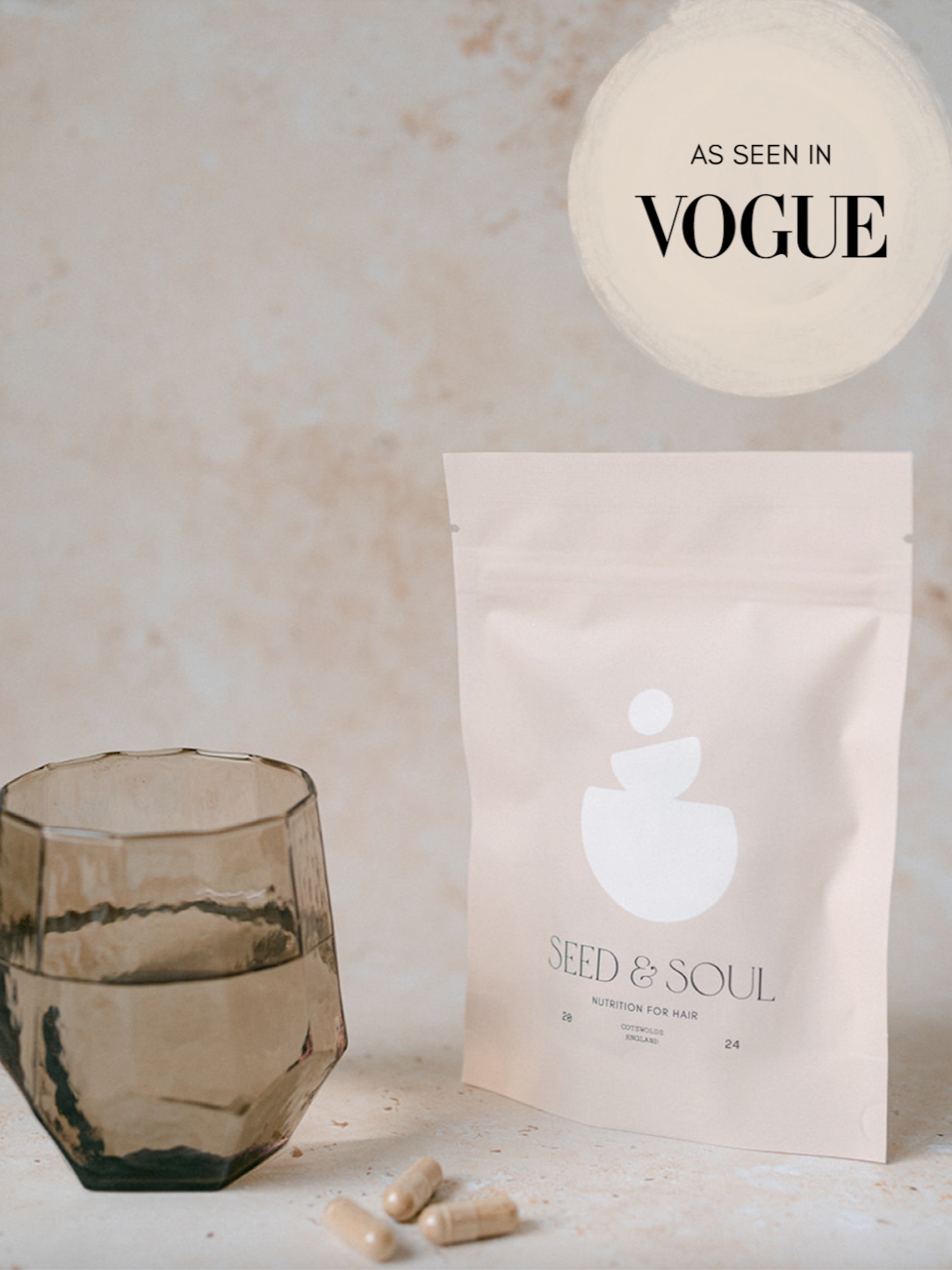
We asked Deborah, a trichologist and co-founder of Seed & Soul Nutrition for Hair, what’s causing the rise in hair loss and what we can do about it. All Haug London Haus salon clients can get 10% off Seed & Soul by using the code HAUG10 at the checkout during January.

What Causes Hair Loss?
We often talk about hair loss as if it’s something that suddenly appears on the scalp. In reality, hair loss often starts internally well before it becomes visible. Hair loss in women is a signal that something in the body needs attention, or that it’s a response to a trigger in the last three months. Some triggers are more easily remedied than others, and often there can be more than one, so identifying what’s happening and understanding the timeline of hair phases can feel daunting.
It’s important to think of the gut as the gatekeeper. It decides what gets broken down, what gets absorbed, what gets blocked and what gets quietly lost along the way. You can eat plenty of food and still fail to nourish your hair if digestion, absorption or gut health are compromised.
And this is happening far more often than we realise.
A Nation of Overfed but Undernourished People — and What It Means for Hair Loss
We live in a world where food is everywhere, yet genuine nourishment is harder to come by. Ultra-processed foods now dominate modern diets. These are not just foods that are convenient or pre-prepared. They are foods that cannot be recreated in a normal kitchen, because they rely on industrial processing, chemical additives and flavour engineering.
Scientists refer to this as the “bliss factor”, foods designed to hijack dopamine, override natural satiety signals and keep people eating more, not because they’re hungry, but because the brain is being stimulated.
The result is a population that is technically overfed, yet biologically undernourished, leading to insulin resistance in many people. Even many “healthy” convenience foods fall into this category. Expensive salads, packaged smoothies and ready meals often contain ingredients grown rapidly, out of season, without natural sunlight, and stripped of their original mineral and fibre content long before they reach a plate.
Hair follicles don’t respond to calories. They respond to nutrients.
Teenagers, Stress and the Rise in Autoimmune Hair Loss
In teenagers, we’re seeing a worrying rise in hair conditions like Alopecia Areata. Teenage diets are often high in sugar, refined carbohydrates and ultra-processed foods, combined with high stress, disrupted sleep and constant dopamine stimulation from screens. Appetite regulation can become distorted. Some teens eat very little; others eat frequently but without nutrient density.
Chronic stress raises cortisol levels and, alongside unstable blood sugar, places pressure on the immune system. In some young people, this can contribute to autoimmune patterns where the immune system mistakenly targets the hair follicle.
Hair loss in teenagers is deeply distressing, and while it’s rarely caused by a single factor, nutrition, gut health and stress resilience play a far greater role than many people realise.
Why Crash Dieting and Weight Loss Drugs Can Cause Hair Shedding
Hair loss following rapid weight loss isn’t new, but with weight loss injections now widely used it is becoming far more common. Severe calorie restriction, crash dieting and some weight-loss medications can be responsible for drastic hair shedding.
The body enters a perceived survival state, reducing energy expenditure on non-essential tissues like hair. The hair bulb depends on a nutrient-rich blood supply to sustain healthy hair production. Without it, hair can be pushed prematurely into the shedding stage.
Even when weight loss appears successful, the gut may struggle to absorb enough protein, minerals and micronutrients to support hair growth. The body’s natural triage system to feed organs first and hair last means that shedding often shows up weeks or months later, catching people off guard.
Hair doesn’t fall out because weight loss is “bad”. It falls out because the body doesn’t feel safe enough to keep growing it. So, whilst a weight loss journey may be necessary for your health, it’s important to ensure a nutrient-rich diet and enough food to support exercise. If your hair is signalling stress, pay attention.
Alcohol, Gut Health and Hair Loss: The Connection
Alcohol is often overlooked in conversations about hair loss, yet it plays a significant role in gut health.
Alcohol can disrupt the gut microbiome, damage the gut lining and reduce the absorption of key nutrients needed for hair, including B vitamins, zinc and magnesium. Regular alcohol intake can also increase inflammation and interfere with sleep quality, compounding the problem.
For many people, shortening the alcohol window rather than drinking little and often can make a noticeable difference. One drink a day is not always as neutral as it’s made out to be, especially when gut microbiota is already struggling or hair health is under strain.
Why Understanding These Triggers Matters for Hair Loss Prevention
Understanding the gut as the gatekeeper changes the conversation around hair loss. It shifts the focus from quick fixes to long-term resilience, and from blaming age or genetics alone, to recognising how nutrition, digestion, stress and modern food all interact.
As women’s hormones deplete later in life, organs that once relied on estrogen now demand more nutritional support to combat the effects of fluctuating hormones on hair growth.
Hair health is not about eating perfectly. It’s about creating an internal environment where growth is possible. Whilst nutrition isn’t the only factor in hair loss, it is frequently a key element in the majority of cases we see.
Expert Hair Advice at Haug London Haus
If you’re worried about your hair, speak to your hairdresser at Haug London Haus in Fitzrovia for an expert assessment. Hair loss is a common modern-day issue, and with the right support and recovery plan, improvement is often possible. You are never alone.
Guest Author Deborah Maguire is a Registered Trichologist and Co-Founder of Seed & Soul Nutrition for Hair.